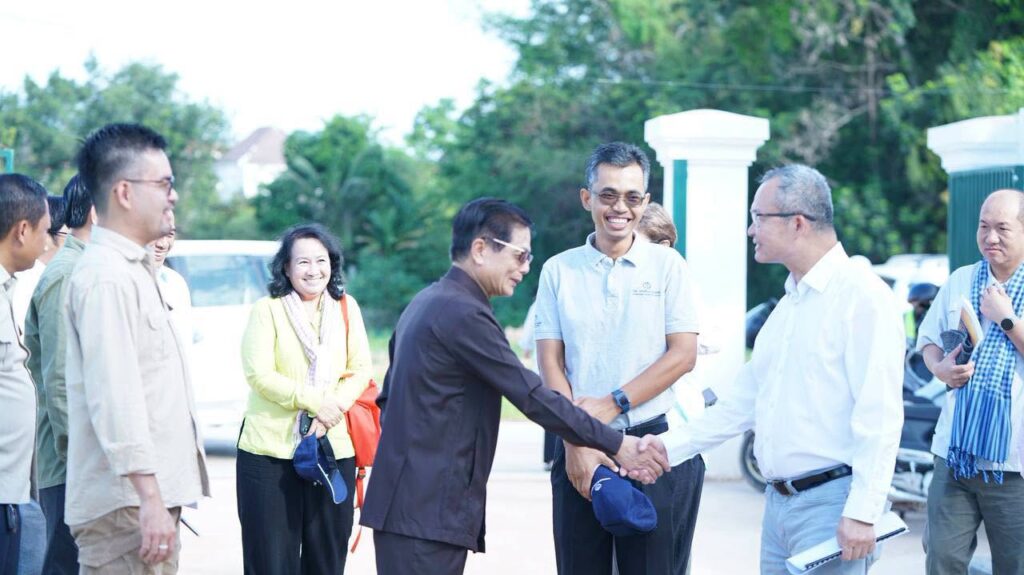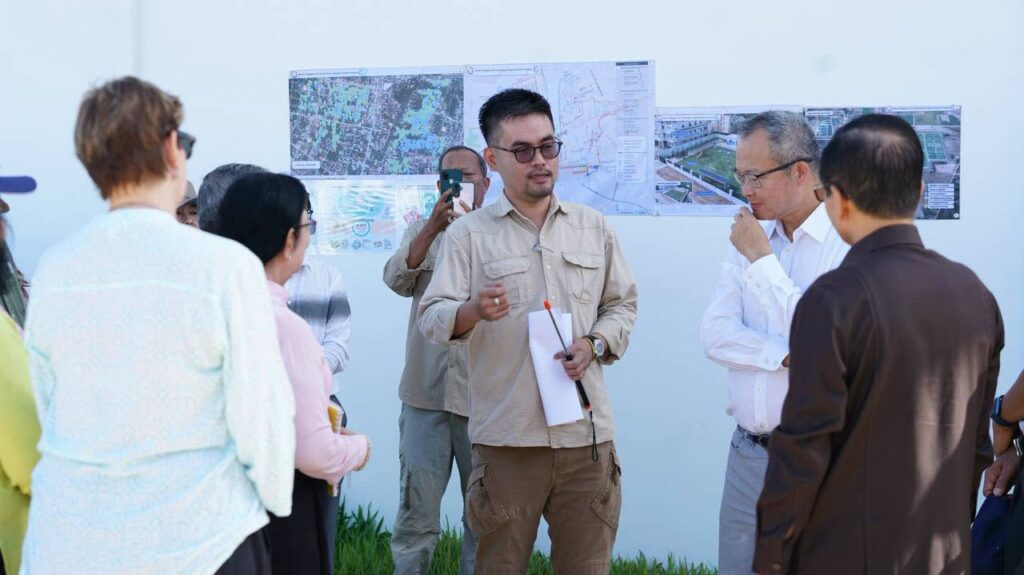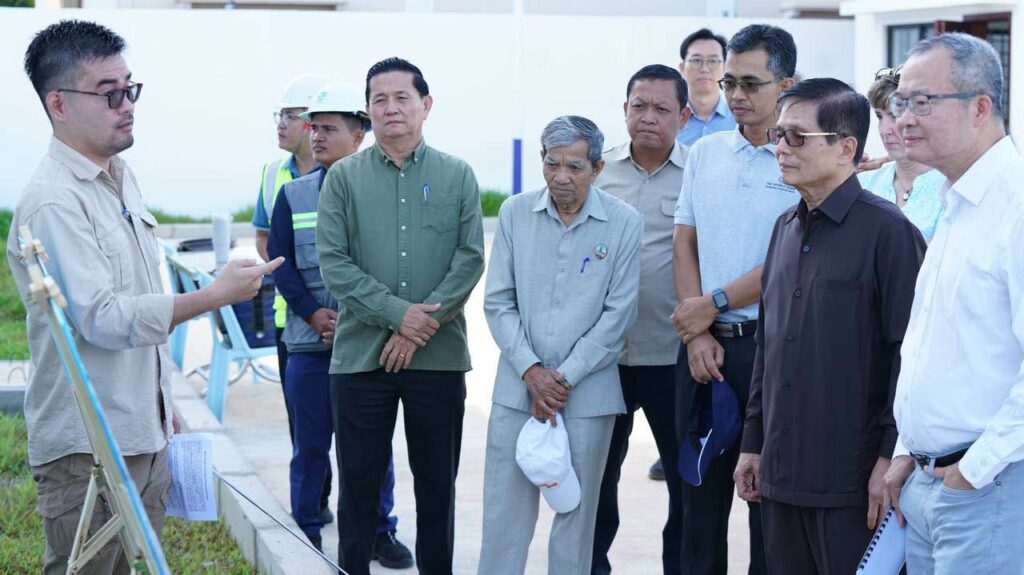

On the morning of July 10, 2026, H.E. Ros Vanna, Secretary of State at the Ministry of Public Works and Transportation, led the ministry’s delegation accompanying that of the World Bank (WB), headed by Mr. Guangzhe Chen (Vice President for the “Planet” cluster) and Ms. Julia Fraser (Regional Director for Asia-Pacific), during a visit to Siem Reap Province.
Participants in the mission included: H.E. the Under-Secretary of State, the Vice Governor of Siem Reap Province, the Director of the Provincial Department of Public Works and Transportation, the Deputy Director in charge of Sanitation , Mr. Lun Heng (alumni of the International Executive Master “Water for All” – OpT session 2025-26) as well as technical staff, the project manager and his team, the project’s technical advisor, representatives of the construction company, the World Bank team, and the relevant local authorities.
The purpose of the mission was to inspect the progress of the Water Supply and Sanitation Improvement Project (WaSSIP), financed by a concessional loan from the World Bank in Siem Reap Province.
It should also be noted that approximately 55.25 km of sewer networks (main and secondary collectors) have been constructed—representing 92.08% of the initial target of 60 km—as part of the following subprojects: MPWT-CW-1A (construction of 28.236 km of sewer networks and household connections); MPWT-CW-3 (rehabilitation and upgrading of three pumping stations: Wat Chak, Sala Kanseng, and Chanlong); MPWT-CW-4 (rehabilitation and upgrading of wastewater treatment plants in the Svay Dangkum, Sala Kamreuk, and Sambour neighborhoods); MPWT-CW-6A (construction of 17.577 km of sewer networks and household connections, as well as two new pumping stations); and MPWT-CW-9 (construction of 6.50 km of sewer networks and 467 household connections in the city of Siem Reap). As of June 30, 2026, approximately 22,707 people—representing 98.73% of the project’s target of 23,000 people—had gained access to sanitation services through a free connection to the project’s sewer system; this group included approximately 11,130 women, as well as approximately 195 people living in poverty (ID-poor 1 and ID-poor 2 categories) and 268 people with disabilities or widows. As of that same date, the project had an overall completion rate of approximately 90.34%